Recurring Failure Mode
One site is serving too many buyer journeys
The same experience is expected to support distributors, direct buyers, procurement teams, service, aftermarket, and regional market differences.
Commerce Without Limits Conference 2027 Friday, August 20, 2027 Early registration is open now.
Register nowManufacturers
Commerce Without Limits helps manufacturers build a well-managed set of direct, partner, and service journeys: direct-buy and quote paths where they make sense, partner-safe handoffs where they are required, and stronger installed-base or spec-led experiences than one overloaded catalog site can usually support.
Why Manufacturer Commerce Gets Stuck
Most manufacturers already have an ERP, a catalog, product content, and partner rules. The problem is that the buyer experience still does not reflect how the business actually sells.
Recurring Failure Mode
The same experience is expected to support distributors, direct buyers, procurement teams, service, aftermarket, and regional market differences.
Recurring Failure Mode
Manufacturers often know there is direct demand to validate, but avoid moving because the only imagined path feels too public and too disruptive.
Recurring Failure Mode
Compatibility, certification, tolerance, fit, application, or service requirements are difficult to understand from brochure-style content alone.
Recurring Failure Mode
Parts, consumables, warranty, maintenance, and support demand are often real revenue opportunities hidden behind support menus instead of built as dedicated revenue channels.
What stays stable
ERP, pricing logic, regional rules, order orchestration, and any compliance or channel-policy systems that protect the business.
PIM or master product truth, when it exists, plus the operational data needed for promise dates, support logic, and fulfillment reality.
The current buying systems when they still work reliably enough to keep taking revenue.
What Commerce Without Limits adds
Clearer buying paths for direct, channel-safe, regional, service, and installed-base journeys.
A controlled way to test direct demand without turning a dealer-facing site into a loud channel shift overnight.
Faster launch cadence for spec-led discovery, parts and service monetization, and AI-ready product storytelling.
Controlled DTC Expansion
The right move is usually a focused pilot with explicit boundaries, not a site-wide shift that confuses distributors, reps, and end buyers all at once.
01
Start with a constrained assortment, geography, or buyer group so direct demand can be validated without reframing the whole business publicly.
02
Keep dealer-safe rules, support language, and merchandising boundaries explicit so the pilot remains operationally clear.
03
Once demand, channel response, and service load are visible, the direct experience can expand from experiment to repeatable revenue.
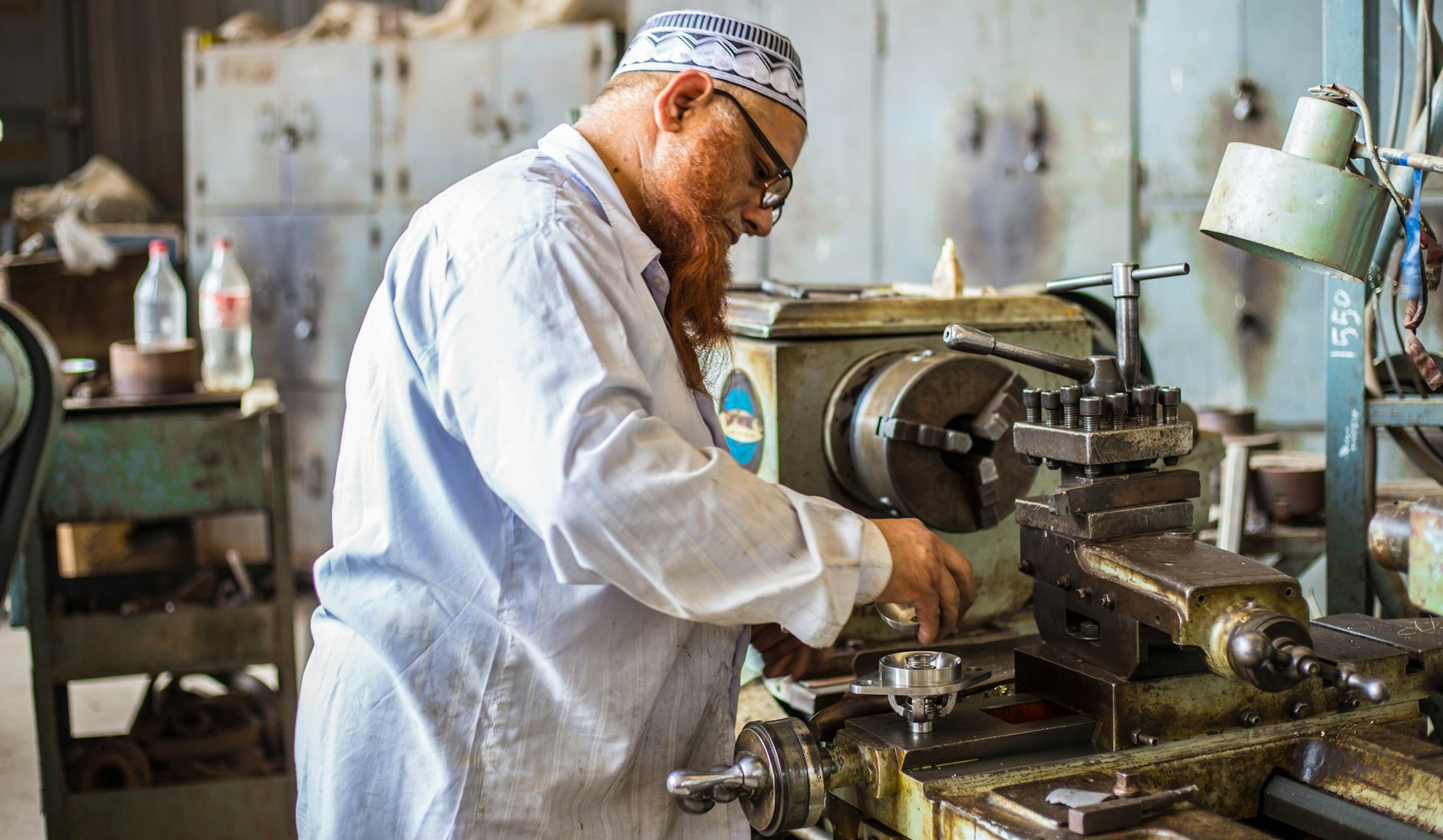
Installed Base As A Real Revenue Opportunity
The aftermarket is often one of the clearest growth opportunities in manufacturing. It just rarely gets its own digital buying experience, content model, or measurable buying flow.
Buyer Journey
Build pages that answer compatibility, certification, use-case, and application-fit questions before the buyer ever asks for a quote.
Buyer Journey
Give existing owners dedicated parts, consumables, service, and reorder journeys so they do not re-enter the acquisition path for routine needs.
Buyer Journey
Create direct experiences that know when to sell, when to quote, and when to route the buyer to an authorized partner.
Buyer Journey
Separate countries, markets, and compliance contexts instead of forcing one oversized site to pretend every commercial rule is the same.
What To Measure
Is technical demand finding a clean path into the commercial process?
Are handoff paths actually channel-safe and commercially useful?
Is installed-base demand being treated as a real source of recurring revenue?
How quickly can the organization open the next market, storefront, or buying path?
Is technical discovery becoming easier?
Is the product truth good enough for AI, compliance, and trustworthy buying?
Common Situations We Help With
The business wants to learn faster without making a loud public channel move before the economics and operating rules are clear.
Regional differences in product, service, compliance, or offer logic are forcing too much complexity into one market experience.
The installed base is large enough to matter, but the digital experience still treats it like a support afterthought instead of a revenue layer.
The buyer journey begins with fit, certification, and technical certainty, but the site still reads like a brochure instead of a decision tool.
Best Matching Growth Scenarios
International Expansion
Launch new countries with controlled domain, catalog, market, and operational separation instead of one oversized storefront.
Competition Disruption Stores
Launch specialist storefronts that intercept competitor weakness, underserved segments, or comparison-stage demand.
Related Business Models
Direct-to-Consumer Brands
Consumer brands that need more owned demand, faster merchandising tests, and expansion options beyond one flagship storefront.
Distributors
Distributors that need territory-level demand capture, category depth, and faster buying experiences across branches, vendors, or vertical markets.
We use cookies that are necessary for core site functionality and, with your consent, analytics cookies to measure performance and improve the website. You can accept or reject non-essential cookies. See our Cookie Policy.